Let’s talk about habits! Actually, back it up a little. People talk a lot about habits and productivity, and all the 10-second videos on your favorite social media APPs can delude you into think we have all got our act together; that everyone is now one hundred percent into setting healthy habits and achieving all their goals. That’s just not true. Too many people struggle with committing to good habits and there are people that have spent their entire lives talking about one [seemingly easy] habit or goal they want to achieve but which they never quite seem to do. As we head into May (or would we be in May by the time I finish writing this? We’ll see. Yay made it in time for April after all), it can be a good time to take stock of goals we set at the beginning of the year, but this can also be a depressing event if you’ve fallen off the wagon of all the good habits you started on January 5. Behavior change is hard but extremely necessary since sustaining healthy behaviors is crucial to a long and healthy life. In fact, according to Dr Edmondson of Columbia’s Center for Behavioral Cardiovascular Health, a recent study shows that human behavior accounts for almost 40 percent of the risk for heart disease, cancer, and stroke. So, behavior change can literally be life or death. Given that, how can we imbibe healthy habits and ultimately change behavior?
Book of the Month: Gilead by Marilynne Robinson
When I first started reading Gilead, I honestly didn’t think it would be the book of the month or that I would even talk about it (for various reasons, some discussed below), but gradually, page after page, it moved me beyond words. And here we are. The book of this month is an old book titled, Gilead, and written by Marilynne Robinson.

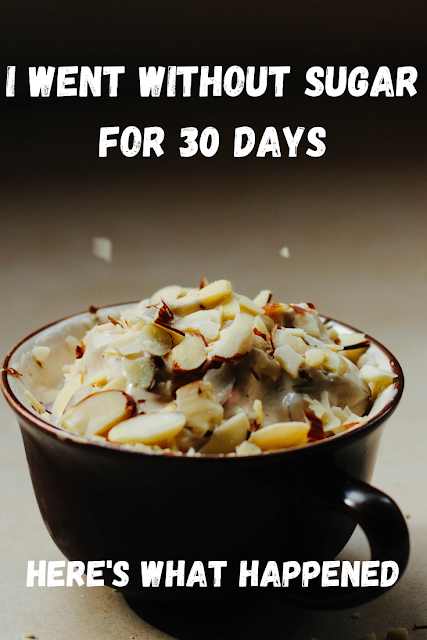
I Went Without Sugar for 30 Days: A Sugar-Free Challenge With Meaning
A few months ago, I came across a YouTube video where the vlogger had gone an entire year without sugar. I posted it on Friday Reflections. I remember thinking this is not possible. How I drew the line from that thinking to embarking on a no-sugar challenge still eludes me. I know I love a good challenge so entering into a new year, I decided to try it. So here goes, I went without sugar for 30 days. When I say "without sugar", I mean without any added sugar or processed sugar. So of course, I still ate fruits since the sugar in fruits in naturally occurring. This challenge was a while ago in January but you know me and writing about stuff. Anyway, let's get into it. At first, I kept a “diary” to keep track of my feelings around everything going on, but soon it became repetitive so I just stopped. That said, please excuse the fact that my tenses below are all over the place. On some days, I wrote in real time. On others, I wrote in the evening in retrospect. I could edit it to have consistent tenses, but then it would sound and feel weird and inauthentic. The alternative is to leave as is. I chose that option.
Day 1:
Friday Reflections
1.) Happy April, folks! Is that a thing we still say?
2.) Don't worry too much about goals you set earlier and whether or not you're achieving them. Focus instead on your systems and your habits. Also, don't be reluctant to ditch some goals you made. It's okay if they no longer serve you. We are humans not trees. We can move.
How to Decide Which PhD Program Offer to Accept When you Have Multiple Offers
Hi people! It’s that time of the year when acceptances are rolling in from Ph.D. programs and excitement is bubbling in the hearts of recipients. Someone I am mentoring (my God, does this read as pretentious as it sounds?) told me she received an acceptance into her first choice PhD program! Such fantastic news. I am very happy for her. The visiting/open day (or whatever it is called now) will be happening soon. For those who don’t know much about the process, it’s a day when grad programs invite accepted students to come visit their program after being accepted but before deciding whether to in fact enroll. They understand that prospective students may have 3 or 4 or 5 (or even more for some lucky people) programs to choose from and need information to make a decision. Part of attending the grad students day/visiting/open day is gathering that information.

Book of the Month: How Beautiful We Were by Imbolo Imbue
Hello and welcome to the book of this month! I have slacked off on this blog these past few weeks and want to get back in the groove of things. Needless to say, I LOVED the book of this month. From the same author who brought us Behold the Dreamers, the book of this month is called How Beautiful We Were, and that past tense in the title reveals more than you can imagine. New York Times described this book as "sweeping and quietly devastating" and I couldn't agree more This is not a feel good story at all. Anyway, let's get into it.
"We should have known the end was near..."
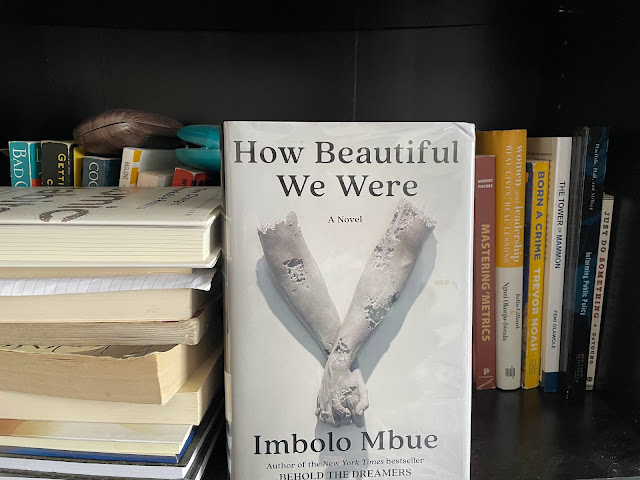
The book tells the story of what happens when a small fictional village in Africa (yes, the author was this unspecific) called Kosawa decides to fight against an American oil company that had been polluting their land for many years. It follows a group of children who were born in the village, but especially draws the focus on one of those kids, a girl named Thula who ultimately leads the revolution and resistance. When the story starts, the village is very polluted, the rivers are covered in toxic waste, the air is dirty, the kids are getting sick and dying. In response, the oil company just resorts to false promises that things will get better but things aren't getting better and kids continue to drop like flies. So, the villagers decide to take matters into their own hands, and when the story starts the children are watching their parents fight the oil company and over time, the fight becomes theirs and they take over. The story unfolds from the perspective of "The Children'', a group of about seven kids and the family of one of them, Thula, who becomes and becomes the leader of the movement to bring the company to justice.
INTERNATIONAL WOMEN'S DAY 2022
I happened to be in Florence, Italy today, at the Galleria Della Accademia (Accademia Gallery). The first piece of art I saw when I walked in was a marble statue, a masterpiece by Giambologna, called "The Rape of the Sabine Women". This represents an incident often called the same name or sometimes termed "Abduction of the Sabine Women". Let me tell you a little about that incident. According to Roman mythology and historians like Livy, in the early history of Rome, just after its founding, Romulus and his male followers realized the population wasn't growing enough and thus worried about the city's strength. Yet, there were so few women inhabitants that growing the city's population would be challenging. They appealed to a bunch of people including some from neighboring towns to co-mingle with them or marry them, but that was not successful. Thereafter, they decided the next course of action was to abduct Sabine women during a festival (they deceptively invited these women to) and then, they raped them.